A reflection for Tuesday of the 20th Week in Ordinary Time.
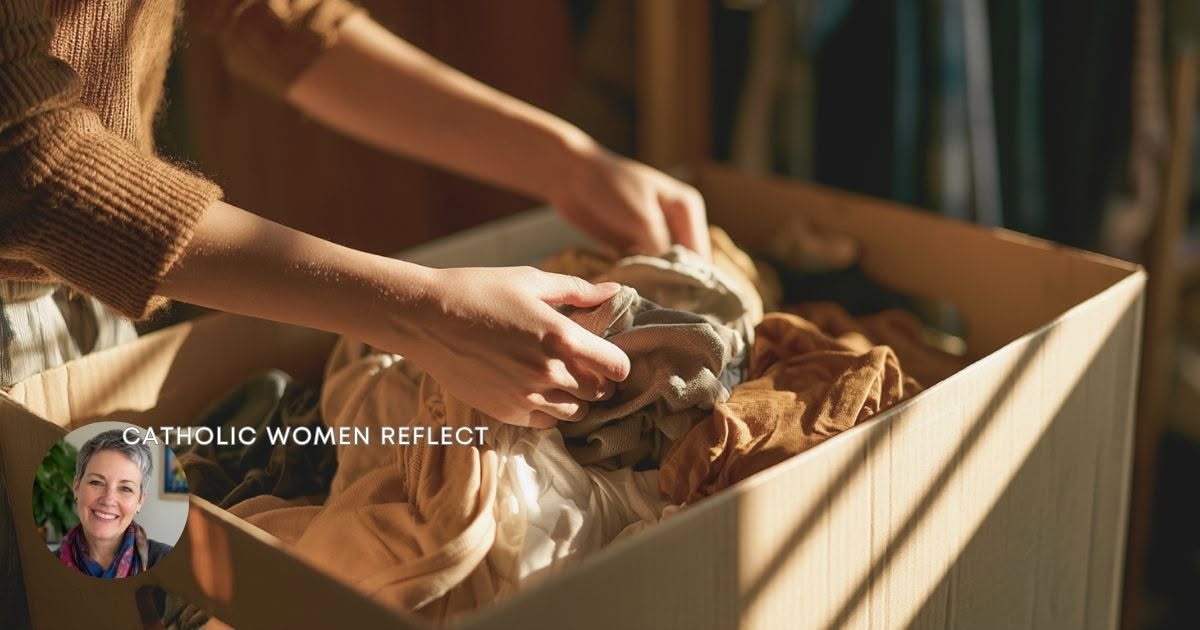
A few years ago, I was cleaning out a closet and found several things I had once thought I absolutely needed. A coat I had hardly worn. Serving dishes saved for occasions that never seemed to come. Shoes that were still perfectly good but had not left the shelf in years.
None of these things was wrong. But standing there with bags to give away, I had to smile at how convincing desire can be in the moment. We tell ourselves, “I need this.” Later, we discover that what felt necessary was only temporary.
Jesus’ words in Matthew 19 are difficult because they unsettle our assumptions about wealth and security. He tells the disciples how hard it is for the rich to enter the kingdom of heaven, and they are astonished. We may be astonished too, because wealth is often treated as proof that life is going well. We admire success, comfort, independence, and the ability to provide more.
But Jesus is asking a deeper question: what has possession of us?
There is nothing inherently holy about deprivation, and poverty should never be romanticized. People need food, shelter, medical care, safety, education, and the dignity of having enough to live. But once our basic needs are met, “more” can become a habit of the heart.
More money. More space. More recognition. More security. More control.
And the trouble with “more” is that it rarely announces when it has become enough.
That is why enough can be a spiritual word.
Enough does not mean giving up ambition or refusing good things. It means learning to recognize sufficiency. It means asking whether what we are pursuing is actually giving life, or simply feeding anxiety and comparison. It means knowing when gratitude should replace acquisition.
The prince of Tyre in Ezekiel offers a darker version of the same temptation. His wealth and wisdom convince him that he is greater than he is. Prosperity becomes pride. Success becomes self-sufficiency. He forgets that he is human.
That danger remains with us.
We may never imagine ourselves gods, but we can live as though we are entirely self-made. We can believe that what we own proves our worth, that our comfort matters more than another person’s need, or that security can somehow protect us from every loss.
Life eventually teaches otherwise.
Age teaches it. Illness teaches it. Grief teaches it. Love teaches it.
Some of the most important things we receive cannot be purchased, controlled, or stored away: a conversation at the kitchen table, a hand held in a hospital room, forgiveness offered after a long silence, laughter with family, prayer when there are no words left.
These things remind us that abundance and possession are not the same.
Perhaps the spiritual question is not, “How much am I allowed to have?” but, “What is enough for me to live generously?”
Enough room. Enough money. Enough recognition. Enough certainty.
And when I have enough, what might become possible for someone else?
Jesus does not leave the disciples in despair. “For human beings this is impossible, but for God all things are possible.”
Even our attachments can change. Our grip can loosen. Gratitude can grow where fear once lived.
The kingdom of God may begin, in part, when we stop asking how much more we can gather and begin asking what we can release.
Enough is not a word of scarcity.
It can be a word of freedom.
Prayer
God of abundance,
teach us to recognize what is enough.
Free us from the restless hunger
to measure our worth by what we possess.
Give us gratitude for what sustains us,
generosity toward those who have too little,
and wisdom to know what we can release.
Help us trust that our deepest security
is not found in what we hold,
but in your faithful love.
Amen.
Leave a Reply