
A reflection on John 1:19–28 for the 3rd Sunday of Advent Year B.
John the Baptist says he is not Elijah. In Matthew 11:14, Jesus says that he is. Scripture can be confusing and even seem contradictory sometimes. It is helpful to consider the background and context. And Elijah comes up throughout the Bible.
2 Kings 2:11–12 never describes Elijah dying. Elisha watches him taken into heaven in a whirlwind. That leaves a different possibility from the return of a prophet who has died, especially when Malachi 3:23–24 promises that God will send Elijah. His work will include turning the hearts of parents and children towards one another. Is that what is happening at the Jordan in the ministry of John the Baptist?
In Luke 1:13–17 , the angel says John will come ‘in the spirit and power of Elijah’. That describes his prophetic work without identifying him as Elijah returning in person. It allows a way to hear John’s answer alongside Jesus’ identification of him in Matthew.
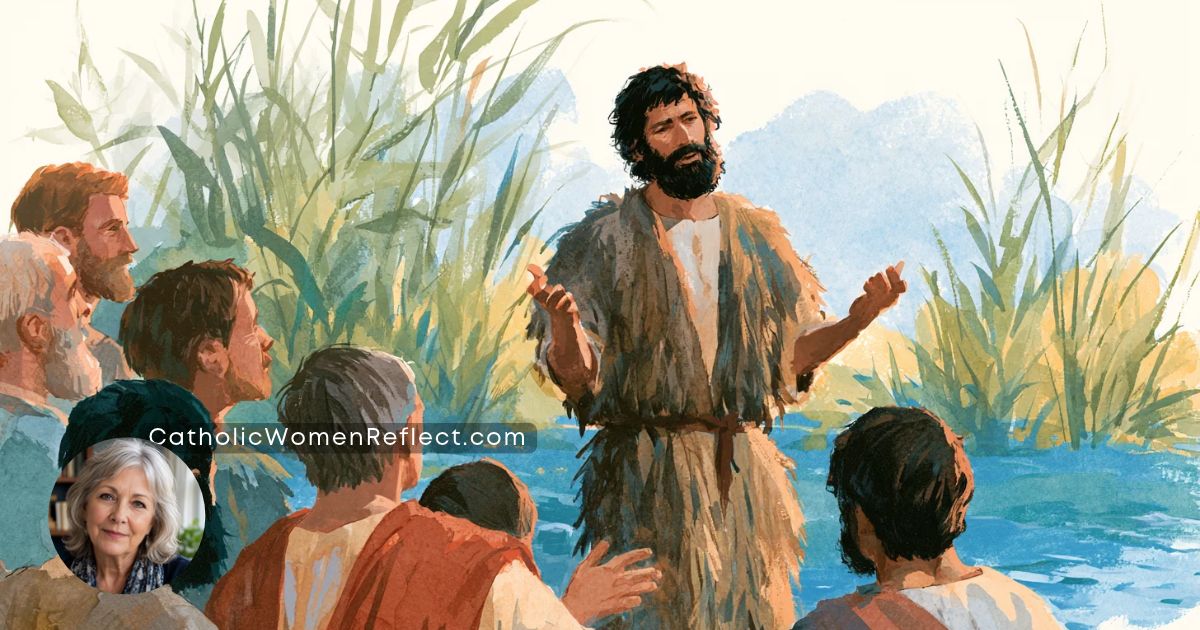
In John’s Gospel, the Baptist answers with Isaiah’s words about a voice in the wilderness. He does not explain his relationship to Elijah. His visitors need an answer to take back to Jerusalem. He gives them a scriptural description of his task rather than accepting one of their proposed identities.
They are trying to understand where they stand in God’s promise. John’s baptism needs explaining. If Elijah has returned, the moment has an urgency that any other interesting preacher would not have.
I find digging into questions like this interesting. Scripture does not always provide easy answers for us. Grappling with questions like these allows room for the Holy Spirit to speak to us in new ways.
Prayer
Lord Jesus, John prepared people for your coming. Through his witness, help me understand what you are asking of your people as we wait for you. Amen.