
A reflection on Jeremiah 2:12-13 and Psalm 36 for Thursday of the 16th Week in Ordinary Time.
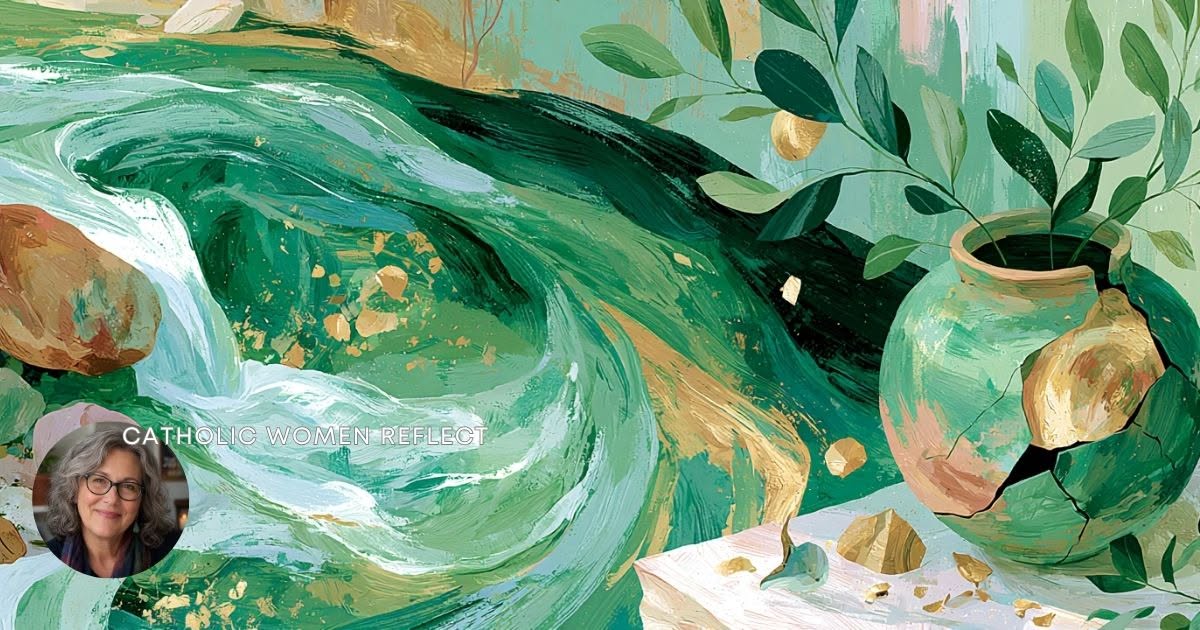
Jeremiah gives us one of Scripture’s strongest images for spiritual emptiness. God says that the people have turned away from “the fountain of living water” and have dug broken cisterns for themselves, cisterns that cannot hold water.
A cistern was meant to collect and store water. In a dry land, it could be a source of safety. But a cracked cistern was useless. No matter how much water was poured into it, the water slowly disappeared.
This is what happens when we ask temporary things to give us lasting life.
We may look for our worth in other people’s approval. We may try to prove ourselves through work, productivity, or success. We may depend on money, status, control, political influence, or the comfort of being seen as respectable. Even religious practice can become a broken cistern when it is more about appearance than relationship with God.
These things are not always wrong in themselves. Work can be meaningful. Money can provide security. Leadership can serve the common good. Religious traditions can guide and strengthen us. The problem begins when we expect them to tell us who we are or to fill the deepest places in us.
They cannot carry that weight.
Approval fades. Success changes. Money can disappear. Control is never complete. Influence is temporary. Respectability can become a mask. When we depend on these things for our identity, we often find ourselves needing more and more, yet feeling less and less satisfied.
Broken cisterns keep us busy. They make us believe that one more achievement, one more compliment, one more victory, or one more sign of control will finally bring peace. But the peace does not last. The water keeps leaking out.
Psalm 36 offers a different image. God is not a cracked container or a shallow pool. God is the fountain of life.
A fountain does not merely store water. It keeps flowing.
God’s mercy does not run out when we fail. God’s love does not depend on our status. God does not value us because we are productive, admired, powerful, or perfect. Our lives have dignity because we belong to God.
This does not mean that faith removes every fear or makes every problem easy. It means we no longer have to ask fragile things to save us. We can enjoy success without worshiping it. We can work hard without believing our work defines us. We can receive approval without needing it to survive. We can take part in the life of the Church without using religion to appear better than others.
To return to the fountain of life is to return to the truth: we are loved before we achieve anything. We are held even when we lose control. We are not abandoned when our plans fail.
Jeremiah’s words are challenging, but they are also an invitation. God does not point out our broken cisterns simply to shame us. God calls us back because God knows how thirsty we are.
Perhaps the question today is not whether we are thirsty. We all are. The question is where we are going for water.
May we notice the things that promise life but leave us empty. May we have the courage to loosen our grip on them. And may we return, again and again, to the God whose mercy flows freely and whose love can hold every part of our lives.
Journaling prompts
- What do I depend on most for my sense of worth or security?
- Which “broken cistern” keeps promising peace but leaves me feeling empty?
- Is there a good thing in my life that I have begun to expect too much from?
- What would it look like for me to return to God, the fountain of life, this week?
Leave a Reply