
A reflection for an Advent Weekday on December 22.
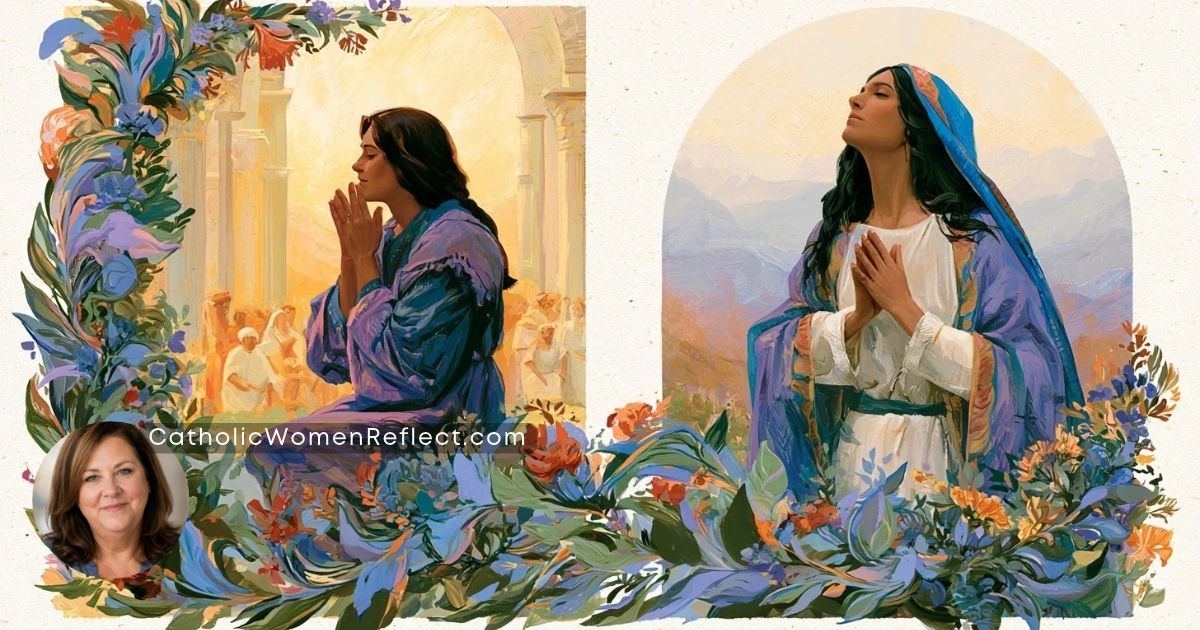
In the first reading, Hannah brings Samuel to Eli at Shiloh and fulfills her promise to dedicate him to the Lord (1 Samuel 1:24–28). Her song follows in 1 Samuel 2:1–10.
The verses about hunger and power are especially close to Mary’s Magnificat: Hannah sings of the hungry receiving food and the poor being raised to sit with princes (1 Samuel 2:4–8). Mary praises God for lifting up the lowly and filling the hungry (Luke 1:52–53).
Hannah has just brought Samuel to Eli. Yet her song goes well beyond her own household, naming the poor who are raised from the dust. Mary tells of the mercy God extends through generations, then speaks about what happens to the proud and powerful.
In Hannah’s song, those who once had enough to eat must hire themselves out for bread, while the hungry hunger no more (1 Samuel 2:5). Mary names both sides also. The hungry receive good things, and the rich leave empty-handed. These songs concern who has enough to eat.
Mary also names Abraham and his descendants. She understands what is happening in her life is part of God’s promises to Israel. Her song sounds like Hannah’s because she praises the God Hannah praised, who cares for the poor.
Mary’s song is part of Evening Prayer. The Church makes these words about hunger and power become part of its daily worship. Through Mary, those praying can also bring to mind Hannah’s prayer, and how God works through the ages.
Leave a Reply