
A reflection for Thursday of the 20th Week in Ordinary Time.
The ending of this Gospel is one of those passages that can make you squirm a little.
A king throws a wedding feast. The first guests refuse to come, so he opens the doors wide and invites people in from the roads, “bad and good alike.” That part sounds wonderfully generous, and it is.
But then comes the man without a wedding garment.
He is confronted, has no answer, and is thrown out.
Well now.
That does not exactly sound like the soft, comforting ending we might have hoped for.
But I think the discomfort is part of the point.
God’s invitation is wide. Wider than we sometimes want it to be. He calls the respectable and the messy, the faithful and the wandering, the polished and the rough around the edges. He does not wait until we have our lives all cleaned up before He invites us in.
Thank goodness for that.
If God waited until we were worthy before calling us, none of us would ever make it through the door.
Grace is gift.
It is not something we earn by being good enough, organized enough, prayerful enough, or morally impressive enough.
But grace is not cheap.
That is where the wedding garment comes in.
The king does not expect the guest to have earned the invitation. He does expect the guest to respond to it.
There is a difference.
Sometimes we hear “God loves me as I am” and stop there.
That statement is true.
God does love us as we are.
He loves the sinner.
He loves the doubter.
He loves the divorced.
He loves the addict.
He loves the person carrying anger, shame, pride, jealousy, fear, or a whole pile of bad decisions.
But His love is not passive.
God does not look at the parts of us that are hurting ourselves and others and say, “Well, that is just who you are.”
No.
Love wants more for the beloved.
A good parent loves a child exactly as she is, but still expects her to grow.
A good doctor accepts the patient in front of him, but does not pretend the illness is health.
God welcomes us in our mess, but He does not bless the mess and call the work finished.
He wants to change us.
Ezekiel says it beautifully: God promises to give His people a new heart and a new spirit.
Not just better manners.
Not just a religious-looking life.
A new heart.
That means some things in us have to go.
Resentment has to go.
Self-righteousness has to go.
Habitual sin has to go.
The old excuses have to go.
The little grudges we have nursed so long they feel like family heirlooms may have to go too.
And Lord knows, we can get attached to those.
We like grace as long as it comforts us.
We get less excited when grace starts rearranging the furniture.
But that is what grace does.
It heals.
It cleans.
It corrects.
It strengthens.
It teaches us to forgive, to repent, to tell the truth, to make amends, to practice mercy, and to stop pretending that holiness is somebody else’s job.
Psalm 51 gets right to the heart of it: “Create a clean heart in me.”
That is not the prayer of someone trying to impress God.
It is the prayer of someone who knows she needs Him.
There is freedom in that kind of honesty.
We do not have to show up before God pretending we are better than we are.
We can come with the sin.
Come with the confusion.
Come with the bad habit we are ashamed to admit is still hanging around.
Come with the marriage wound, the family mess, the sharp tongue, the envy, the fear, the bitterness.
Come as you are.
But do not mistake welcome for permission to stay stuck.
The Lord is always calling us deeper.
That may mean going to confession after putting it off for far too long.
It may mean apologizing.
It may mean changing a relationship that has become unhealthy.
It may mean giving up a habit that keeps pulling us away from God.
It may mean forgiving someone while still keeping wise boundaries.
It may mean finally admitting that our anger has become an identity.
None of that is easy.
Change rarely is.
But the good news is that God does not simply stand across the room barking instructions.
He gives us the grace to become what He calls us to be.
The same God who invites us to the feast gives us the new heart.
That matters.
We are not expected to transform ourselves by sheer willpower.
We cooperate.
We say yes.
We bring our willingness.
And God does what only God can do.
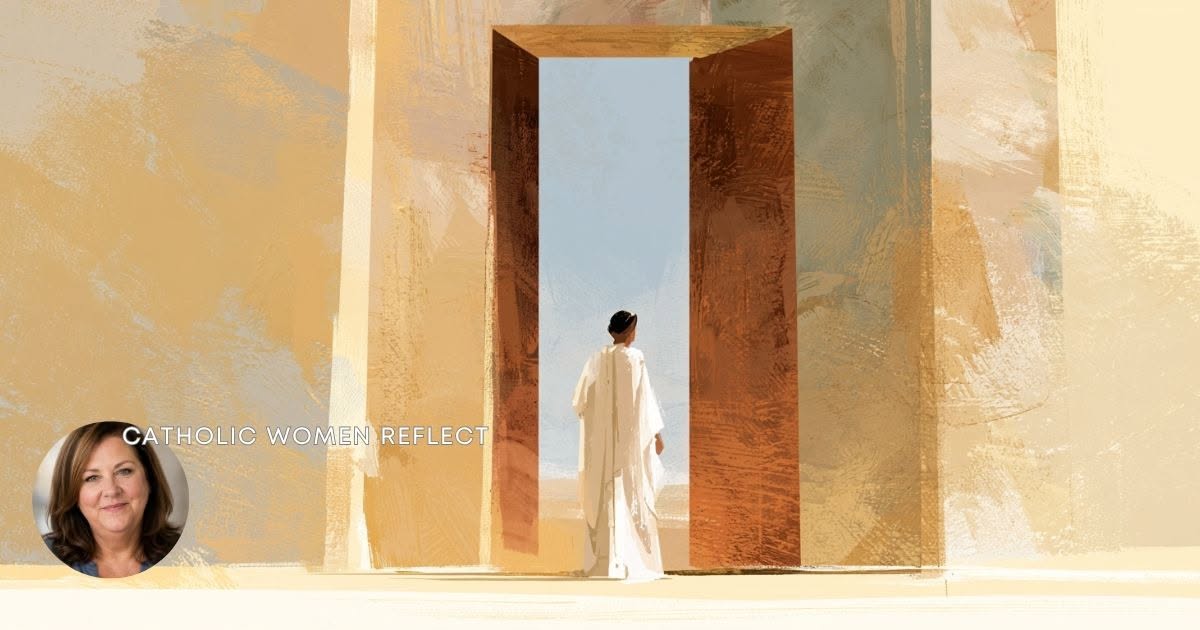
I think that is why the wedding garment matters so much.
The feast is not just about getting through the door.
It is about becoming ready for the life of the Kingdom.
It is about allowing Christ to clothe us in mercy, truth, humility, repentance, and love.
So yes, come as you are.
Come tired.
Come wounded.
Come ashamed.
Come uncertain.
Come with yesterday’s mistakes still clinging to you.
Just come.
But once you are in the presence of the King, do not be surprised if He starts changing you.
That is not rejection.
That is love.
And maybe the holiest prayer we can pray is simply this:
“Lord, thank You for letting me in.
Now make me ready for the feast.”