
Based on 1 Corinthians 3:1-9 for Wednesday of the 22nd Week in Ordinary Time.
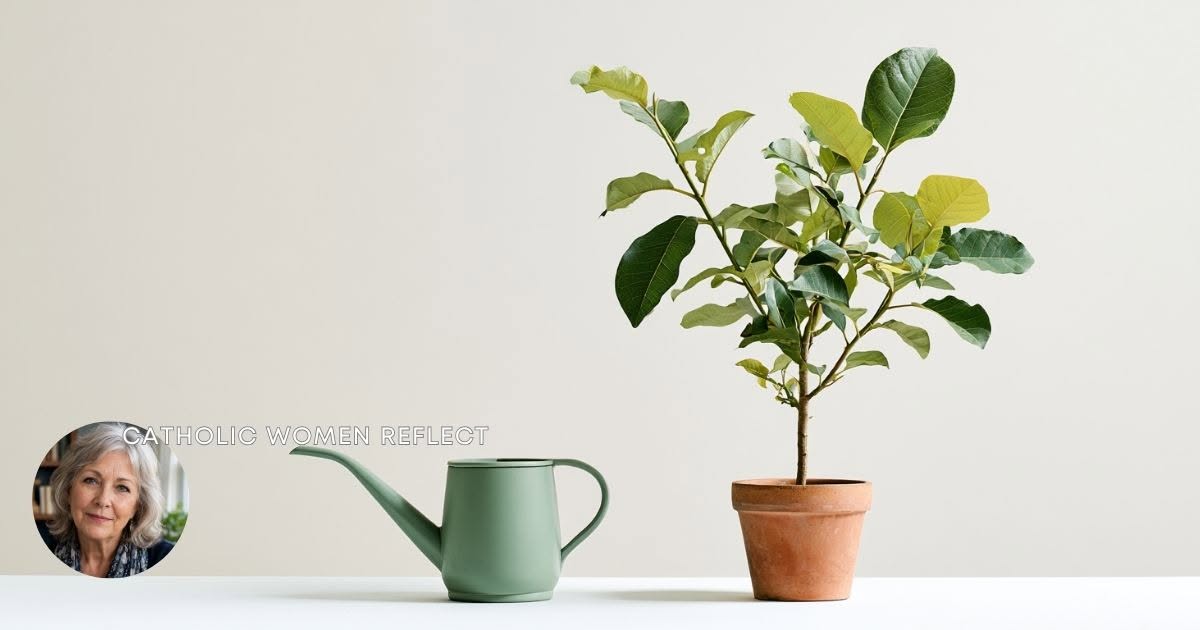
Paul’s words to the Corinthians make me smile because his point is so practical. One person plants, another waters, and God gives the growth.
That is it.
The gardeners have a job, certainly. Planting matters. Watering matters. Care, patience, and attention matter. But nobody stands in the backyard admiring a tomato plant and says, “What an extraordinary watering can.”
Yet in the Church, we sometimes come close.
We become attached to particular priests, bishops, speakers, theologians, writers, or Catholic personalities. We have our favorites. We recommend their podcasts, quote their books, share their videos, and occasionally defend them with an enthusiasm that might make Paul raise an eyebrow. Before long, we are no longer simply appreciating someone’s gifts. We are forming camps.
Paul had apparently seen enough of that in Corinth.
Some people claimed Paul. Others preferred Apollos. Paul’s response was basically: Have you forgotten who we are?
Servants.
That word is wonderfully deflating.
Paul does not pretend that leadership is unimportant. He knows that people can teach well, preach well, encourage others, and help faith take root. But he refuses to confuse usefulness with importance. He plants. Apollos waters. God gives the growth.
I need that reminder because I am drawn to people who speak with clarity and confidence. There is something reassuring about a person who seems to have an answer ready before I have even finished forming the question. But clarity can become charisma, charisma can become loyalty, and loyalty can become something uncomfortably close to devotion if I am not paying attention.
No Christian leader should have to carry that kind of weight.
And no Christian should give it to them.
Good leaders point beyond themselves. They do not need to become the center of everyone’s spiritual life. They do not treat disagreement as betrayal. They are not threatened when someone learns from another teacher, finds nourishment in another parish, or discovers that God is working somewhere outside their particular corner of the garden.
The healthiest leaders seem to understand that people do not belong to them.
That is where Paul’s image becomes freeing.
If I plant something good, I do not have to make it grow.
If I teach someone, I do not control what happens next.
If I encourage someone who is struggling with faith, I am not responsible for producing a conversion on schedule.
If someone I love has walked away from the Church, I can pray, listen, love, and remain available without assuming that their spiritual life is somehow my personal project.
God gives the growth.
That can be difficult to accept because planting and watering give us something to do. Waiting requires trust. And most of us would rather fix things than entrust them to God, especially when the person involved is someone we love.
We can even become possessive about ministries.
“This is my program.”
“My group.”
“My parish.”
“My way of doing things.”
I understand the temptation. When we invest time and care in something, we naturally become attached to it. But attachment can quietly turn into ownership. Then someone new arrives with a different idea, and suddenly we are protecting territory instead of tending a garden.
Paul offers a corrective: we are God’s co-workers.
Not owners.
Not celebrities.
Not saviors.
Co-workers.
The Gospel gives us another glimpse of the same freedom. Jesus heals people, and the crowds understandably want him to stay. Who wouldn’t? If someone had just healed half the neighborhood, I would probably be putting his name on the parish calendar through 2032.
But Jesus moves on.
He knows the mission is larger than one place and one group of people. He will not allow even grateful admiration to trap him.
There is wisdom in that for the Church.
A healthy community should be grateful for gifted leaders without becoming dependent on them. A healthy ministry should be able to continue when one person steps away. A healthy faith should survive the disappointment of discovering that a beloved priest, author, speaker, or leader is human after all.
Because they always are.
So am I.
So are we all.
Perhaps this reading asks us to hold our spiritual leaders with gratitude but not with a clenched fist. Appreciate the gardener. Learn from the gardener. Thank the gardener.
But do not confuse the gardener with God.
And perhaps it asks something else of those of us who serve. We can plant carefully. We can water generously. We can offer whatever gifts we have without needing to control the result or receive credit for the harvest.
The garden was never ours.
The growth was never ours either.
And strangely enough, that may be one of the most freeing things Paul could have told us.
Leave a Reply